

Portugal ICT Study 2026-2030
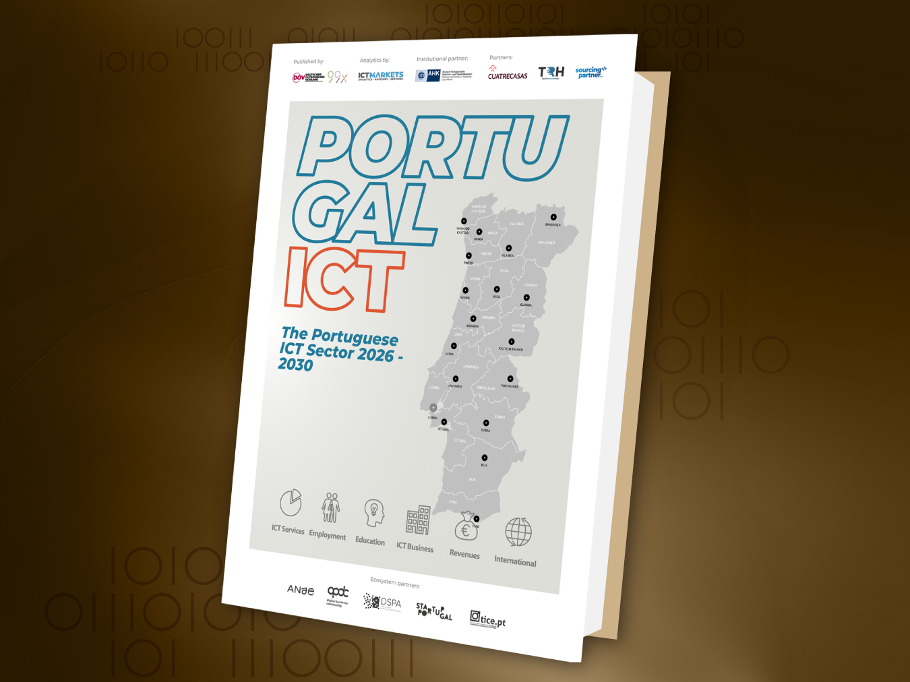
Discover why Portugal is becoming one of Europe’s most strategic hubs for digital services and nearshore partnerships and why more companies are choosing it to scale their technology teams. Developed by the German Outsourcing Association in cooperation with 99x, the study combines market data, ecosystem analysis and insights from ICT companies operating in Portugal.
Get your free copy
You’ll receive a download link by email so you can access the study anytime.
Inside the report you will find:
1
The growth trajectory of Portugal’s ICT sector, its role in Europe’s digital economy and how it became a leading nearshore hub
2
Key talent trends, including education, skills, workforce availability, and how the ecosystem is advancing to support growing demand
3
The evolving technology landscape, covering cloud, cybersecurity, data engineering and AI-driven services
4
Insights from the Business Survey, highlighting the future of digital services, delivery models, and collaboration opportunities
Who is this study for?
This new market study provides a comprehensive overview of the Portuguese technology ecosystem and its growing relevance for companies across Europe, particularly in the German-speaking market.
If you are involved in shaping technology decisions, evaluating sourcing strategies or scaling digital capabilities, this study is for you. It is particularly relevant for:
✔ CIOs and IT decision-makers
✔ Sourcing and vendor management leaders
✔ Investors and analysts
✔ ICT service providers and shared service organizations
Explore the trends shaping Portugal’s ICT landscape through 2030
Portugal has developed into one of Europe’s most attractive locations for technology services, with the ICT sector already contributing close to 10% of the country’s GDP and expected to generate €16.6 billion in revenue by 2028. These factors are driving stronger digital collaboration between Portuguese technology providers and companies in Europe:
Highly qualified and multilingual talent
A strong and recognized university ecosystem
Competitive operational conditions
Growing international technology investment
About the study
With data-backed market trends through 2030 and insights from industry leaders, this report aims to help decision-makers better understand Portugal’s potential as a partner for digital services and nearshore collaboration.
This initiative is supported by:




In partnership with:





Let’s turn insights into action
Interested in what Portugal’s ICT landscape could mean for your business?
If you're exploring ways to scale your technology capabilities, build nearshore teams, or better understand the opportunities highlighted in this study, we’d be happy to continue the conversation.


Guilherme Ramos Pereira
Head of Strategic Development, 99x Europe
Guilherme Ramos Pereira
Head of Strategic Development, 99x Europe